Article overview
Exposure should lead the finish decision.
Choosing the right finish for perforated and expanded metal in Australian coastal and humid environments starts with one question: how exposed is the site? Salt, humidity, chlorinated air, poor drainage and inconsistent cleaning can affect durability more than colour or pattern.
Selection guide
Start with exposure before choosing the finish.
For surf-exposed or seaward beachfront applications, 316 or 316L stainless steel is normally the safer baseline for exposed panels. Near the coast, 316 stainless steel or marine-grade aluminium with a robust PVDF or architectural powder coating system should be reviewed. Humid inland facades may suit anodised or PVDF-coated aluminium when drainage, edges and maintenance are properly planned.
Decision table
Match the material route to the project condition.
A beachfront hotel facade may require 316 or 316L stainless steel, protected edges and stainless fixings. A coastal car park screen may use 316 stainless steel or marine-grade aluminium with PVDF or premium powder coating. A pool-adjacent feature screen needs careful avoidance of water traps, compatible fixings and finish continuity around cut or fabricated edges.
Product comparison
Perforated and expanded metal behave differently after fabrication.
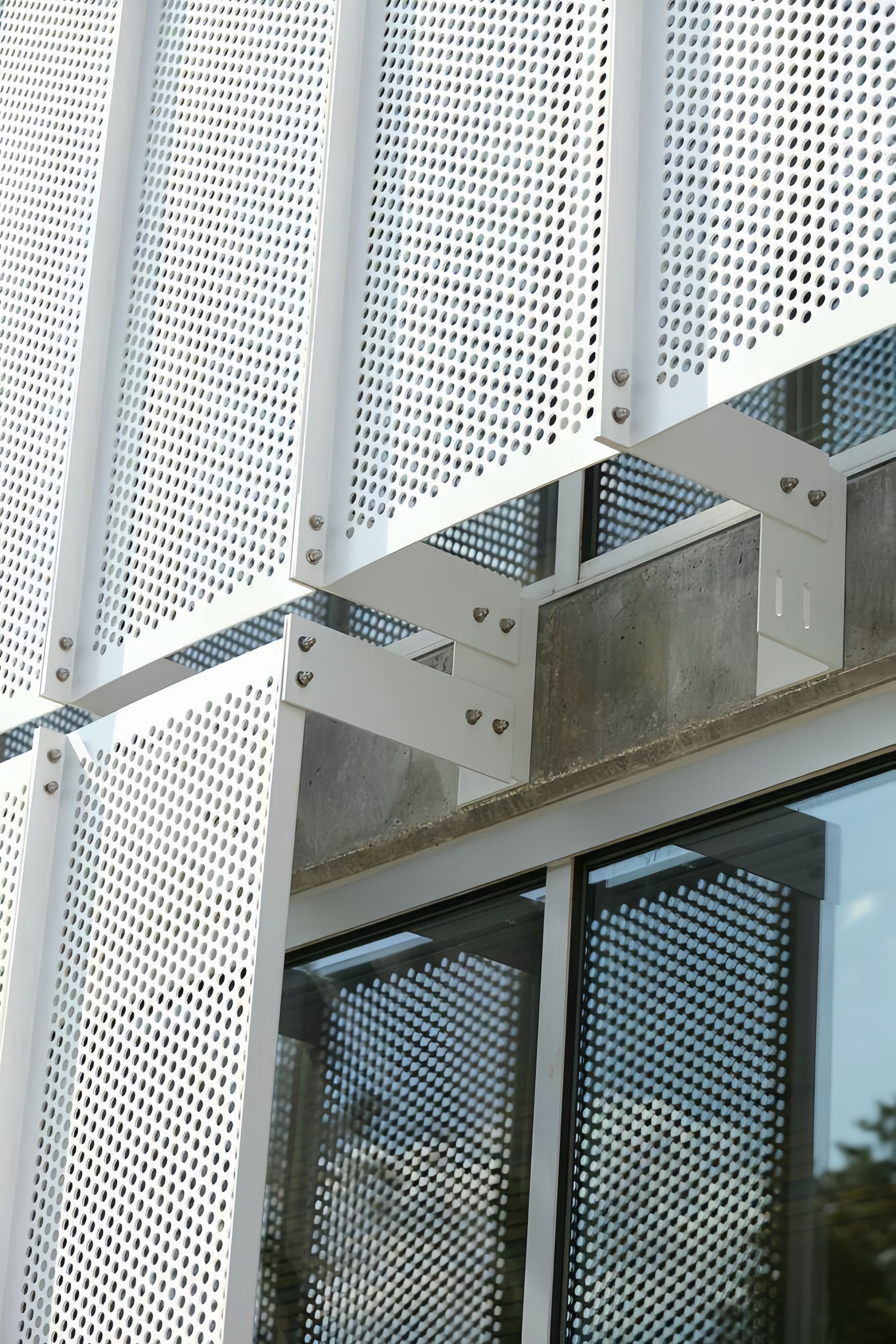
Perforated metal often creates many exposed cut edges around holes, especially with small perforations and high open area. Expanded metal keeps continuous strands through the sheet expansion process, which can reduce some punched-edge concerns. In demanding coastal environments, both systems still need the right base metal, finish pretreatment, edge detailing and inspection.
Finish route
Aluminium and stainless steel need different finish thinking.
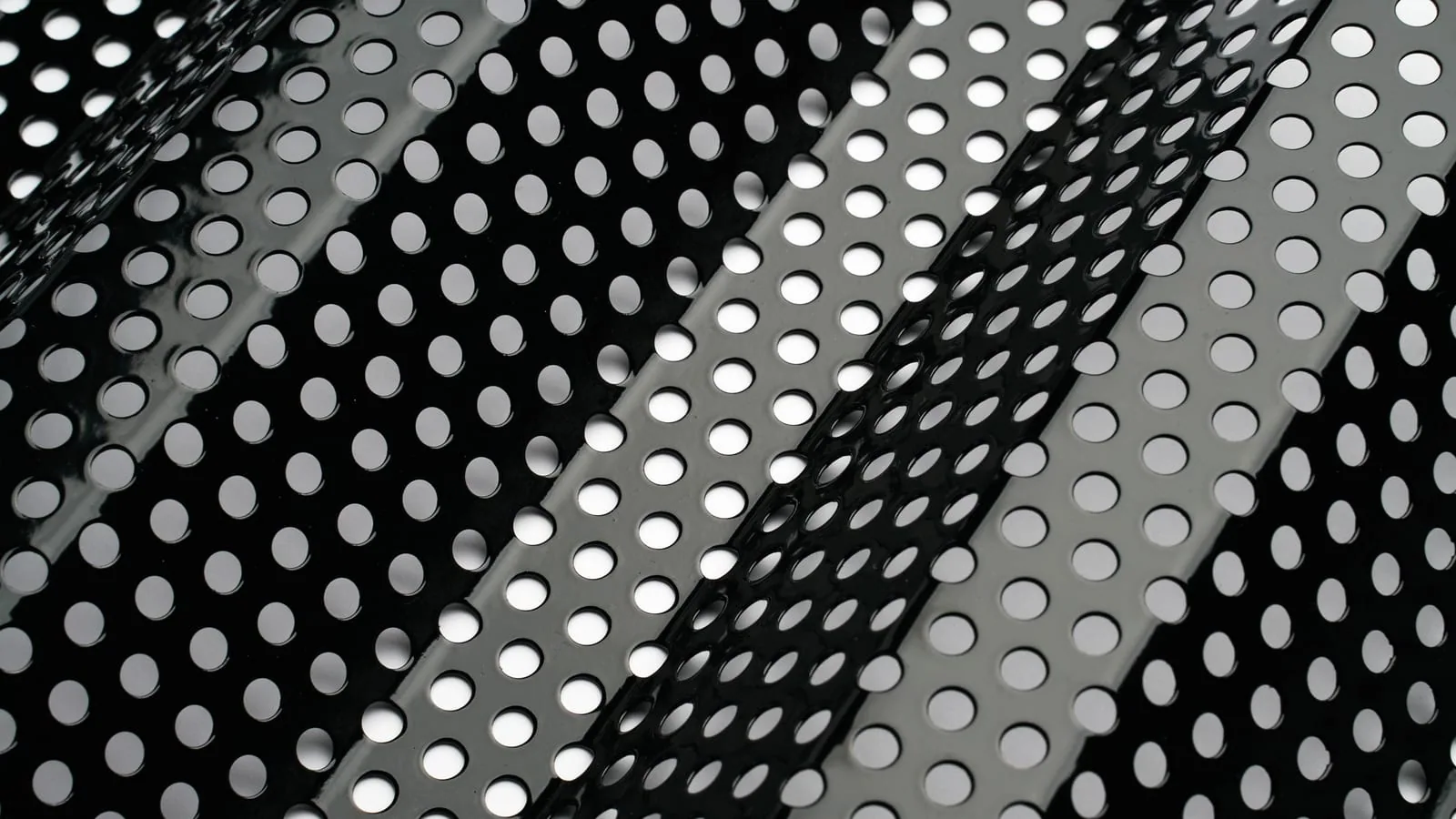
For aluminium, PVDF is often chosen when long-term colour retention and barrier protection are priorities, while architectural anodising can suit metallic appearance and abrasion resistance. For stainless steel, 316 or 316L should be considered where pitting or tea staining are concerns, with passivation or electropolishing reviewed for harsher marine atmospheres.
Detailing
Edges, fixings and drainage often decide long-term performance.
Folded returns, dressed cut edges, post-weld treatment, compatible stainless fixings, insulating washers and good drainage can prevent many avoidable failures. Where different metals touch in a wet environment, separation barriers are important because dissimilar metals can accelerate corrosion.
Maintenance
A finish is only complete when the cleaning plan is realistic.
Coastal and humid projects should document wash-down and inspection frequency. Near-coast installations may need more frequent fresh-water cleaning than sheltered interiors, and surf-exposed or pool-adjacent areas can require tighter maintenance routines depending on the microclimate and coating warranty.
Project checklist
Information worth confirming before the next discussion
- Exact exposure condition and distance from salt influence
- Base metal choice: 316 stainless, aluminium or another route
- Finish system: PVDF, powder coating, anodising, passivation or electropolishing
- Cut edge, folded return and weld treatment
- Compatible fixings and dissimilar-metal isolation
- Drainage and water-trap avoidance
- Cleaning and inspection schedule
- Model datasheet and finish sample approval
Questions to clarify
If you still have questions, start with these answers
Is 316 stainless steel necessary for coastal perforated metal?
It is often the safer baseline for exposed coastal or seaward applications, especially where pitting, tea staining and salt deposits are likely. Sheltered interiors or lower-exposure areas may allow other routes, but exposure should be confirmed before choosing only by colour or price.
Is PVDF better than powder coating for coastal aluminium panels?
PVDF is often selected for long-term colour retention and barrier performance in demanding exterior conditions. Premium architectural powder coating may also work when the pretreatment and warranty match the exposure. The coating supplier's technical data should be checked for the exact site.
Does expanded metal need less edge protection than perforated metal?
Expanded metal can have fewer punched-hole edges than perforated sheet, but it still needs careful cut-edge treatment, finish continuity, drainage and compatible fixings. Coastal durability depends on the whole assembly, not only the sheet pattern.
What should be included in a coastal finish specification?
Include exposure condition, base metal, coating or stainless finish route, edge protection, welding treatment, fixing material, dissimilar-metal isolation, drainage details, sample approval and a realistic cleaning schedule.